


Are Painful Periods Normal?
“Fun” isn’t generally the term we’d use to describe having your period — but that doesn’t mean it should be miserable either, right?
Periods tend to tread the line between uncomfortable (read: soreness, bloating, and mild cramping) and total agony (read: painful cramps, migraines, and general terror). Each period can be different, rendering it difficult to track patterns that could be cause for concern.
Not to mention just how subjective experiences of pain and discomfort can be — or the fact that women are often socialized to normalize pain as a facet of the feminine (trans-inclusive) experience.
It’s no wonder there’s confusion surrounding just how uncomfortable an uncomfortable period should be.
If you’re trying to figure out where your period stands in the discomfort-pain matrix and whether the slew of other symptoms you may be experiencing are routine or not, you’ve come to the right place: we’re deep diving into the nuances of period pain.
Period 101

While the handful of days you’re menstruating each month may not be among your favorites — from mood swings to your jeans fitting a little tighter than usual — it also shouldn’t be so agonizing as to disrupt your day-to-day, according to the experts.
Mild pain, cramping, bloating, and fatigue are among the host of normal (albeit, super annoying) symptoms you might experience during your period. Those are due to a fun little hormone called prostaglandin that rises right before your period, triggering muscle contraction in your uterus to help shed your uterine lining.
Those pesky contractions feel like cramping (especially in the early days of your period) and can cause pain and inflammation. Heating pads, abdominal massages, warm baths, gentle movement, and anti-inflammatory medications (like ibuprofen) can help you find relief — as can extra comfy pj’s, a rotation of snacks, and a movie marathon.
When it comes to managing long term discomfort, there’s also evidence to suggest that regular movement, vitamins and supplements (like calcium and magnesium), a balanced diet, and cycle-syncing are just a few of the ways you can support your body in the balancing act that is regulating your ever-evolving hormonal cycle.
Painful Periods
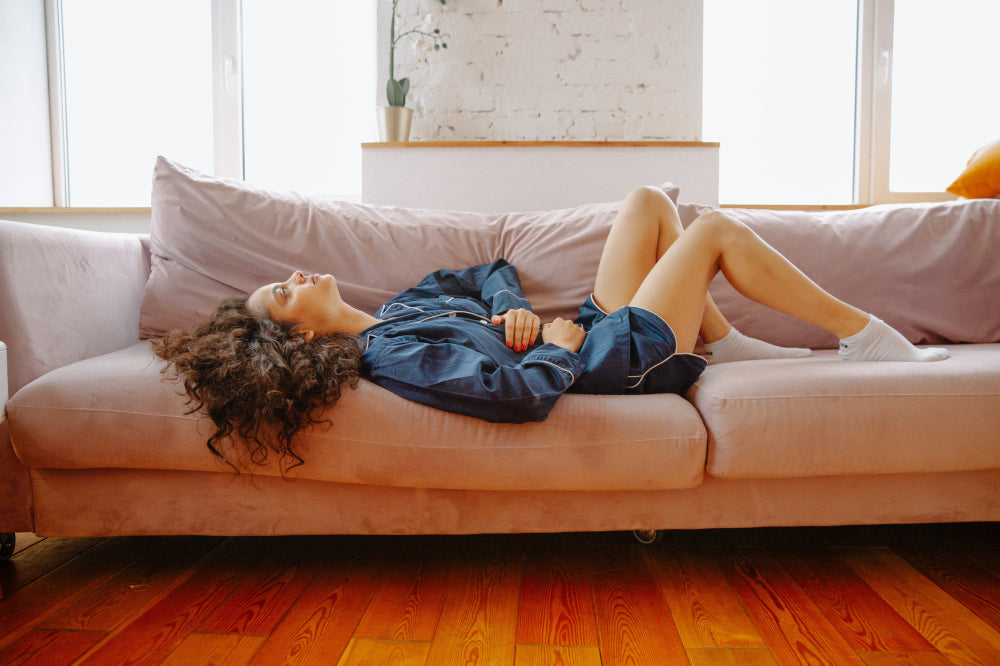
If your periods regularly feel nothing like the aforementioned and, instead, feel like a horror flick that involves everything from severe pain to headaches to diarrhea and nausea, you’re not alone.
Dysmenorrhea — AKA: period cramps — are experienced by roughly 84% of people who menstruate. “We’re led to believe pain, discomfort and all unpleasant symptoms are totally normal,” nutritional therapist and The Female Health Hub founder, Jodie Brandman, said to Forbes. “Unfortunately, this way of thinking means that so many women just grit their teeth through their periods but it just shouldn’t be this way.”
If period cramps and symptoms routinely prevent you from going about your day-to-day, like, say, going to work, school, or that concert you’ve been looking forward to forever, this is a telltale sign your period pain may be telling you something broader about your health.
Endometriosis, fibroids, PCOS, hormone imbalances, and other conditions are often harbingers of painful periods, pointing to tissue growth in areas outside of the uterus, cysts, or inflammation that can be serious barriers to living life and feeling like yourself — both during your period and throughout your monthly hormonal cycle.
How to Cope

In her book, BLEED: Destroying Myths and Misogyny in Endometriosis, journalist Tracey Lindeman details her journey with painful periods due to endometriosis.
“When we get our periods, we’re taught that pain is intrinsic to the female experience and therefore doesn’t matter,” she says. “We know this to be true because the men and boys around us don’t seem to face the same doubt and dismissal.”
What she’s getting at is just how fraught the path to diagnosis and treatment can be with misogyny. While medical experts stipulate that period pain isn’t “normal,” and often indicative of a broader issue, solutions that treat the underlying problem are scarce.
While an estimated 176 million people worldwide live with endometriosis — and roughly 8-13% of reproductive-aged women are affected by PCOS — most of those who make up these statistics remain undiagnosed.
“Realizations like these make me wonder how my life could have been different if I had known as a teen what periods were supposed to feel like, and if more of the doctors and nurses I saw and understood what periods were supposed to feel like and communicated better about the boundaries of normal menstrual pain,” says Tracey in her book.
Today, medical treatment exists mostly in the form of addressing immediate symptoms through birth control and pain-medication scripts — both of which can be a total game-changer for those experiencing chronic period pain. In some instances, surgery can also provide long term relief.
If you’re among the unlucky and growing collective of folks with chronic period pain, be sure to communicate your experience with your doctor or OB-GYN and to advocate for diagnosis and a path to treatment that works best for you.
When it comes to promoting period pain as an area that warrants greater research and medical attention, however, talking openly about periods and challenging period pain as “normal" is also a great starting point.
In short: period pain sucks, and you shouldn’t have to put up with it.
—
We hope you found this post informative — but remember: we’re not doctors and this post is not medical advice! While all posts are fact-checked and well researched, we always recommend you chat with your doctor about any questions or concerns you might have regarding a medical condition.
We’re here to support and educate, but never with the aim of disregarding professional medical advice you’ve been given. Phew, now that that’s out of the way, you can go on living unapologetically free.


